University of Cumbria brings Cumbrian farming perspectives to global food and agriculture debate on international stage
University academics take “What if the land stops giving?” to the World Food Prize 2026 event in Des Moines, Iowa.
Academics from the University of Cumbria brought Cumbrian farming and rural community perspectives to an international discussion on the future of food and agriculture at the 2026 World Food Prize Borlaug Dialogue in Des Moines, Iowa.

Photo credit: Matthew Putney 2026
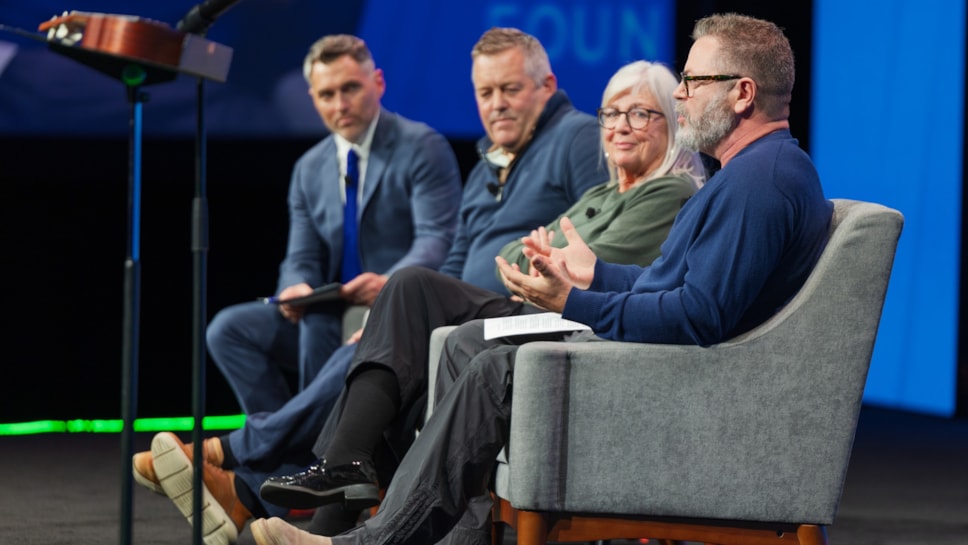
Professor Robert Montgomery and Sofia Fernandez developed a main-stage panel session, What if the land stops giving?, exploring a fundamental question: how can we care for the land that sustains us while ensuring it continues to provide food, support livelihoods and sustain communities for generations to come?
Chaired by Professor Montgomery, the discussion brought together Cumbrian farmer and author James Rebanks, actor and author Nick Offerman, and Mary Berry, Executive Director of The Berry Center. Drawing on their experiences with agricultural advocacy and relationships with the late Wendell Berry, the panellists examined the connections between soil health, food quality, food security and the long-term stewardship of the land.
A central theme was the need to see food production as part of a wider system, recognising that soil health, people's health and community resilience are closely connected.
James, whose work as a farmer and author is rooted in his experience farming in the Lake District, highlighted the importance of seeing agriculture as a whole rather than reducing it to isolated problems. He also reflected on the growing understanding of the relationship between the quality of the food we eat and the soil from which it comes.
His perspective brought the realities of working the land into a global conversation about how farming systems can remain productive while protecting the natural resources on which they depend.
Mary described soil as “this thin layer we live from”, emphasising how much depends on protecting the land that makes food production possible. She challenged audiences to look beyond technical ingenuity, noting that while society has achieved much through cleverness, the challenges ahead require wisdom. The discussion highlighted the importance of healthy soils, resilient local food systems, and long-term agricultural decision-making.
She added, “You can’t feed the world by destroying the world.”

Photo credit: Jon Lemons
Nick brought a cultural perspective to the conversation, encouraging audiences to reconsider the relationship between food, health and the natural world. He argued that food should be treated as healthcare, recognising the essential role nourishing food plays in human wellbeing.
He reminded audiences that progress does not always depend on more technology. He shared the line: “You can keep your tech, what we need is another hand”; a call to recognise the value of practical work, human connection and the people who care for the land.
The panellists encouraged audiences to consider not only how much food agriculture produces, but also how it is produced, what it does for human health and whether the systems behind it can endure.
For the University of Cumbria, the session offered an opportunity to bring farmers' and rural communities' experiences into an international conversation about the future of food and farming.
Cumbria’s landscapes provide a distinctive perspective on the relationship between agriculture and community. The region’s experience offers valuable insight into the practical decisions involved in producing food while caring for the land on which future generations will depend.
The discussion reinforced the importance of acting locally while thinking globally. As James argued, we should get the local right before deciding to feed the world. Bringing together perspectives from farming, culture and agricultural advocacy, the panel enabled and to explore how food security, sustainability and agriculture are shaped by both practical experience and global policy discussions.
The event highlighted the University of Cumbria's wider commitment to global food and farming issues through its teaching, research and partnerships. From hosting the UK Youth Institute to participating in the 2026 Borlaug Dialogue, the university continues to support informed discussion and action on food security, sustainable agriculture and environmental stewardship across generations.
Notes to editors
Watch the session: 2026 Borlaug Dialogue | What If The Land Stops Giving?
Find out more:
World Food Prize: https://www.worldfoodprize.org/
UK Youth Institute: https://www.worldfoodprize.org/youth-programs/youth-institutes/united-kingdom/